
Introduction
In today’s digital world, a website is one of the most important assets for any business. Whether you are a startup, small business, or established company, your website plays a key role in attracting customers, building trust, and generating leads.
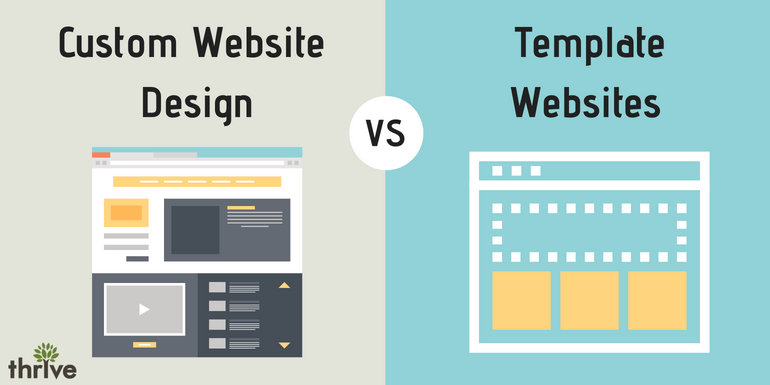
When creating a website, one of the most common questions is: Should you choose a custom website or a template-based website? Both options have their advantages and limitations, and the right choice depends on your business goals, budget, and long-term vision.
This guide will help you understand the differences between custom and template websites so you can make the best decision for your business.
What is a Custom Website?
A custom website is designed and developed from scratch according to your specific business needs. Everything—from layout and design to features and functionality—is built uniquely for your brand.
Key Features:
- Unique design tailored to your brand
- Custom functionality based on requirements
- Scalable and flexible
- Built with your target audience in mind
What is a Template Website?
A template website uses pre-designed layouts that can be customized with your content, images, and branding. These templates are widely available on platforms like WordPress, Wix, and Shopify.
Key Features:
- Ready-made design
- Faster setup
- Lower cost
- Limited customization
Key Differences Between Custom and Template Websites
1. Design and Uniqueness
Custom Website:
Offers a completely unique design that reflects your brand identity. No two websites look the same.
Template Website:
Uses pre-designed layouts, so your website may look similar to others using the same template.
2. Cost
Custom
Higher initial cost due to design and development work.
Template:
More affordable, making it suitable for small businesses or startups with limited budgets.
3. Development Time
Custom:
Takes more time to design, develop, and test.
Template:
Can be launched quickly, sometimes within a few days.
4. Flexibility and Customization
Custom:
Highly flexible. You can add any feature or functionality as per your needs.
Template:
Limited flexibility. Customization depends on the template’s capabilities.
5. Performance and Speed
Custom:
Optimized for performance since it is built specifically for your requirements.
Template:
May include unnecessary features or code, which can affect speed.
6. SEO (Search Engine Optimization)
Custom:
Built with SEO best practices from the start, offering better ranking potential.
Template:
Basic SEO features are available, but optimization may be limited.
7. Scalability
Custom:
Easily scalable as your business grows.
Template:
May face limitations when adding advanced features or expanding functionality.
8. Maintenance
Custom Website:
Requires ongoing maintenance and technical support.
Template Website:
Easier to manage, especially with user-friendly platforms.
Advantages of Custom Websites
- Unique and professional design
- Better brand identity
- High performance and speed
- Advanced functionality
- Long-term scalability
- Strong SEO foundation
Advantages of Template Websites
- Lower cost
- Faster launch
- Easy to use
- No coding knowledge required
- Suitable for small projects
Disadvantages of Custom Websites
- Higher cost
- Longer development time
- Requires professional developers
Disadvantages of Template Websites
- Limited customization
- Generic design
- Performance limitations
- Less control over advanced features
Which One is Better for Your Business?
The answer depends on your business needs:
Choose a Custom Website If:
- You want a unique brand identity
- You need advanced features
- You are planning long-term growth
- You want better SEO performance
Choose a Template Website If:
- You have a limited budget
- You need a website quickly
- Your requirements are simple
- You are just starting out
Real-World Example
A small startup may begin with a template to save costs. As the business grows and requires more features, it can upgrade to a custom is.
On the other hand, a company focused on branding, lead generation, or e-commerce may benefit more from a custom-built solution from the start.
Future Trends in Website Development
- AI-powered builders
- Mobile-first design
- Faster loading speeds
- Personalized user experiences
- Integration with marketing tools
Businesses are moving towards more customized and user-focused.
Conclusion
Both custom and template website have their own advantages. A template it is a great starting point for small businesses, while a custom is offers long-term benefits in terms of branding, performance, and scalability.
If your goal is to build a strong online presence and attract high-quality leads, investing in a custom it can be a smart decision. However, if you need a quick and budget-friendly solution, templates can work effectively.
Ultimately, the best choice depends on your business goals, budget, and future plans.